Web cookies (also called HTTP cookies, browser cookies, or simply cookies) are small pieces of data that websites store on your device (computer, phone, etc.) through your web browser. They are used to remember information about you and your interactions with the site.
Purpose of Cookies:
Session Management:
Keeping you logged in
Remembering items in a shopping cart
Saving language or theme preferences
Personalization:
Tailoring content or ads based on your previous activity
Tracking & Analytics:
Monitoring browsing behavior for analytics or marketing purposes
Types of Cookies:
Session Cookies:
Temporary; deleted when you close your browser
Used for things like keeping you logged in during a single session
Persistent Cookies:
Stored on your device until they expire or are manually deleted
Used for remembering login credentials, settings, etc.
First-Party Cookies:
Set by the website you're visiting directly
Third-Party Cookies:
Set by other domains (usually advertisers) embedded in the website
Commonly used for tracking across multiple sites
Authentication cookies are a special type of web cookie used to identify and verify a user after they log in to a website or web application.
What They Do:
Once you log in to a site, the server creates an authentication cookie and sends it to your browser. This cookie:
Proves to the website that you're logged in
Prevents you from having to log in again on every page you visit
Can persist across sessions if you select "Remember me"
What's Inside an Authentication Cookie?
Typically, it contains:
A unique session ID (not your actual password)
Optional metadata (e.g., expiration time, security flags)
Analytics cookies are cookies used to collect data about how visitors interact with a website. Their primary purpose is to help website owners understand and improve user experience by analyzing things like:
How users navigate the site
Which pages are most/least visited
How long users stay on each page
What device, browser, or location the user is from
What They Track:
Some examples of data analytics cookies may collect:
Page views and time spent on pages
Click paths (how users move from page to page)
Bounce rate (users who leave without interacting)
User demographics (location, language, device)
Referring websites (how users arrived at the site)
Here’s how you can disable cookies in common browsers:
1. Google Chrome
Open Chrome and click the three vertical dots in the top-right corner.
Go to Settings > Privacy and security > Cookies and other site data.
Choose your preferred option:
Block all cookies (not recommended, can break most websites).
Block third-party cookies (can block ads and tracking cookies).
2. Mozilla Firefox
Open Firefox and click the three horizontal lines in the top-right corner.
Go to Settings > Privacy & Security.
Under the Enhanced Tracking Protection section, choose Strict to block most cookies or Custom to manually choose which cookies to block.
3. Safari
Open Safari and click Safari in the top-left corner of the screen.
Go to Preferences > Privacy.
Check Block all cookies to stop all cookies, or select options to block third-party cookies.
4. Microsoft Edge
Open Edge and click the three horizontal dots in the top-right corner.
Go to Settings > Privacy, search, and services > Cookies and site permissions.
Select your cookie settings from there, including blocking all cookies or blocking third-party cookies.
5. On Mobile (iOS/Android)
For Safari on iOS: Go to Settings > Safari > Privacy & Security > Block All Cookies.
For Chrome on Android: Open the app, tap the three dots, go to Settings > Privacy and security > Cookies.
Be Aware:
Disabling cookies can make your online experience more difficult. Some websites may not load properly, or you may be logged out frequently. Also, certain features may not work as expected.
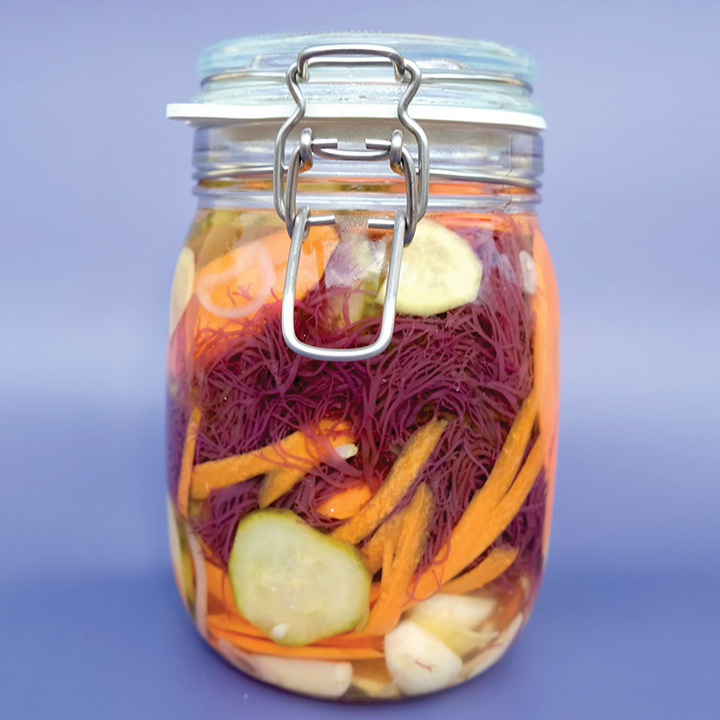
Ogo, also known as limu manauea in Hawai’i, is a bushy, branching red seaweed found in almost all the world’s oceans. Different climates produce various ogo types, with branches ranging from deep purple, thin, and string-like to light orange, thick, and crunchy. Besides its culinary uses, ogo is harvested for agar, a thickening agent used in a wide range of foods including ice cream, and in biomedical applications.
Highlighting ogo’s deep roots in Hawai’i’s history and culture, limu manauea has been an integral part of the traditional Hawaiian diets since time immemorial. The knowledge of gathering and preparing limu has been passed down through generations, primarily among Hawaiian women. Limu manauea is often used in ceremonies, religious rituals, and medicine.
Today, a variety called “long ogo” (Gracilaria parvispora) is cultivated in Hawai’i in a mixed-species aquaculture system. Baskets of long ogo float on the surface of fish ponds and take up nutrients from the fish. Other species of Gracilaria occur and are farmed on the US west and east coasts making this crunchy delicacy available on the mainland as well as Hawai’i.
Flavor Profile (notes and cooking tips)
Floral, clean, medium umami, light bitterness, vegetal, refreshing
Texture
Crisp, al dente, delicate, lacey, crunchy, distinct bite reminiscent of masago
Preparation Tips
Fresh ogo is often found with other types of algae hitchhiking on its branches. This algae is perfectly edible, but if you prefer, you can separate the algae for future composting. Your plants will love it!
To preserve crunchiness and seal in flavor, blanch in pot of boiling water for 1-2 minutes, then immediately transfer to ice bath for 5 minutes.
Land-based tanks in California, Florida, and Connecticut, or floating baskets on fish ponds in Hawaii.
Harvest Season
Year-round
Nutrition
Low in calories (45 cal per pound), rich source of potassium, iron, calcium, magnesium and iodine.
Storage Tips
Refrigerate and consume fresh ogo within 7 days of harvest. To prolong shelf life, freeze or dry in dehydrator and store in a cool, dry place.
Environmental Benefits
Absorbs CO2 from the ocean and produces oxygen, provides food and shelter for marine life. Wild ogo is an indicator for the health of an ecosystem; unhealthy ogo can be a sign of pollution or unstable ocean temperatures.