Web cookies (also called HTTP cookies, browser cookies, or simply cookies) are small pieces of data that websites store on your device (computer, phone, etc.) through your web browser. They are used to remember information about you and your interactions with the site.
Purpose of Cookies:
Session Management:
Keeping you logged in
Remembering items in a shopping cart
Saving language or theme preferences
Personalization:
Tailoring content or ads based on your previous activity
Tracking & Analytics:
Monitoring browsing behavior for analytics or marketing purposes
Types of Cookies:
Session Cookies:
Temporary; deleted when you close your browser
Used for things like keeping you logged in during a single session
Persistent Cookies:
Stored on your device until they expire or are manually deleted
Used for remembering login credentials, settings, etc.
First-Party Cookies:
Set by the website you're visiting directly
Third-Party Cookies:
Set by other domains (usually advertisers) embedded in the website
Commonly used for tracking across multiple sites
Authentication cookies are a special type of web cookie used to identify and verify a user after they log in to a website or web application.
What They Do:
Once you log in to a site, the server creates an authentication cookie and sends it to your browser. This cookie:
Proves to the website that you're logged in
Prevents you from having to log in again on every page you visit
Can persist across sessions if you select "Remember me"
What's Inside an Authentication Cookie?
Typically, it contains:
A unique session ID (not your actual password)
Optional metadata (e.g., expiration time, security flags)
Analytics cookies are cookies used to collect data about how visitors interact with a website. Their primary purpose is to help website owners understand and improve user experience by analyzing things like:
How users navigate the site
Which pages are most/least visited
How long users stay on each page
What device, browser, or location the user is from
What They Track:
Some examples of data analytics cookies may collect:
Page views and time spent on pages
Click paths (how users move from page to page)
Bounce rate (users who leave without interacting)
User demographics (location, language, device)
Referring websites (how users arrived at the site)
Here’s how you can disable cookies in common browsers:
1. Google Chrome
Open Chrome and click the three vertical dots in the top-right corner.
Go to Settings > Privacy and security > Cookies and other site data.
Choose your preferred option:
Block all cookies (not recommended, can break most websites).
Block third-party cookies (can block ads and tracking cookies).
2. Mozilla Firefox
Open Firefox and click the three horizontal lines in the top-right corner.
Go to Settings > Privacy & Security.
Under the Enhanced Tracking Protection section, choose Strict to block most cookies or Custom to manually choose which cookies to block.
3. Safari
Open Safari and click Safari in the top-left corner of the screen.
Go to Preferences > Privacy.
Check Block all cookies to stop all cookies, or select options to block third-party cookies.
4. Microsoft Edge
Open Edge and click the three horizontal dots in the top-right corner.
Go to Settings > Privacy, search, and services > Cookies and site permissions.
Select your cookie settings from there, including blocking all cookies or blocking third-party cookies.
5. On Mobile (iOS/Android)
For Safari on iOS: Go to Settings > Safari > Privacy & Security > Block All Cookies.
For Chrome on Android: Open the app, tap the three dots, go to Settings > Privacy and security > Cookies.
Be Aware:
Disabling cookies can make your online experience more difficult. Some websites may not load properly, or you may be logged out frequently. Also, certain features may not work as expected.
Sugar kelp, with long, flat blades and frilly edges, can grow up to 16 feet, resembling giant lasagna noodles. Found in the North Atlantic, North Pacific, and Arctic Ocean, this versatile seaweed is gaining popularity in US aquaculture, with Maine leading the industry as the largest producer.
In Japan, sugar kelp has been a staple for over 1,500 years and was once used as currency for tax payments. Historically, it has been vital in various industries, from potash and soda ash extraction for gunpowder and soaps in the early 1700s to the alginate boom during World War II where alginate was extracted from kelp and used as a gelling agent. Today, most sugar kelp is produced in Maine and used as a nutritional food source.
Seaweed farming is the fastest-growing aquaculture sector in the US. Maritime workers, like those in the fishing or aquaculture industries, sometimes farm seaweed in the off-season to supplement their income.. Supporting local seaweed farmers provides tasty seaweeds, helps to diversity farming operations, and creates new business opportunities. It’s a win-win for both your taste buds and the economy!
Flavor Profile (notes and cooking tips)
Slightly sweet and floral, clean, vegetal
Texture
Thin, delicate, leafy and tender with a slight crunch
Preparation Tips
Sugar kelp has gelling qualities and can be added to dishes as a thickener. To reduce these gelling qualities, soak sugar kelp in fresh water overnight, then give it a quick rinse before using. When blanched, sugar kelp turns a vibrant green color, adding a pop of color to any dish.
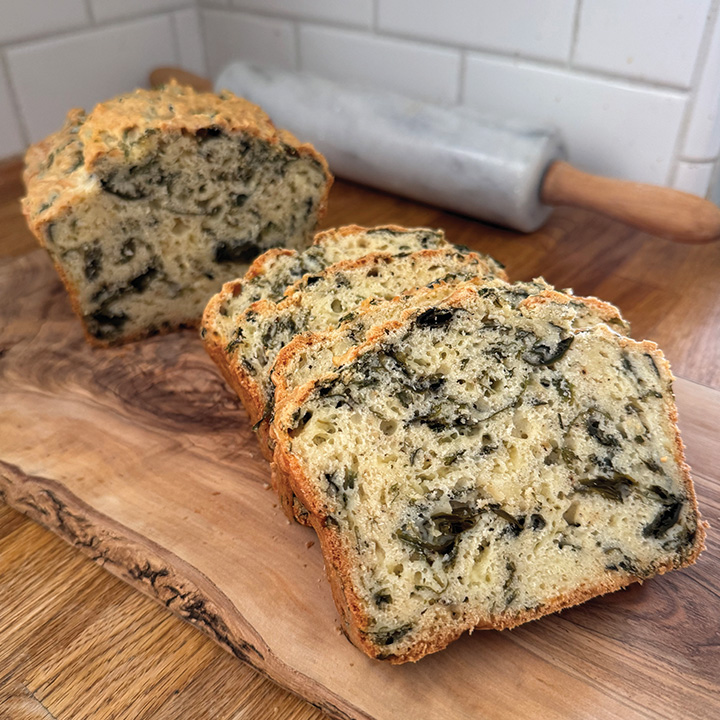
Oil or butter a 9”x5” loaf pan and line with a sheet of parchment paper.
Melt butter in the microwave or stove top and allow to cool. Once cool whisk eggs and buttermilk together with the melted butter.
In a large bowl combine the flour, baking powder, baking soda, salt, and black pepper. Add grated cheese sugar kelp and toss loosely into flour mixture.
Add liquid mixture to flour mixture and combine using a rubber spatula until there are no dry spots. Distribute into loaf pan and bake for 40-50 minutes or until toothpick comes out clean.
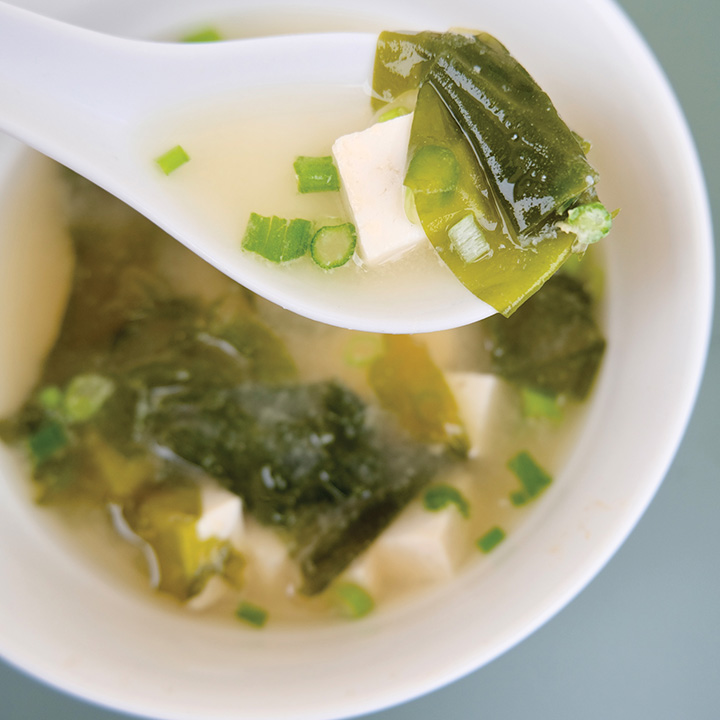
Start by thoroughly rinsing your fresh kelp. Once rinsed well, place ¼ cup of kelp in a pot with 4 cups of water and bring it to a simmer for 5-10 minutes. Strain out the kelp and reserve the broth; this is called dashi and it will be your soup base.
Return the dashi to the pot and heat over medium, making sure it doesn’t boil.
In a separate bowl, add 4-5 tbsp of miso paste and mix with a small amount of dashi until completely dissolved. Then, add the dissolved miso back into the pot.
Cut your silken tofu into ¼-½ inch cubes and add it to the miso soup with ½ a cup of additional kelp and chopped green onion before serving.